Aquarius Festival was an adventure of the highest order.
It was respectful, it was challenging, it was community.
It just made so much sense, it was like, this is the way we can live together
in the company of one another and get things done collectively.
Tony Barry, 1973 Nimbin Aquarius Festival participant and performer.
1. Statement of Purpose
Aquarius Archives nourishes the life, spirit and legacy of the 1973 Nimbin Aquarius Festival by caring for and sharing stories held in archives. Aquarius Archives is a Working Group of Nimbin Aquarius Foundation Inc. (NAFI) and is guided by the NAFI Mission Statement. The Aquarius Archives fosters viable, life affirming opportunities to re/connect with each other and the Earth by learning with the precedent set by exemplary Nimbin Aquarius Elders and their thriving intentional communities around Nimbin.
The Aquarius Archives collection provides a high-quality community cultural resource and attraction for the Nimbin village. We encourage social cohesion and community resilience by stimulating valuable, meaningful and authentic visitor engagement for those coming from near and far.
We collect materials that are primarily about, or which otherwise reflect on or have impact on the experience, history, lives, heritage and interests of Nimbin and surrounding communities in light of social change movements beginning here around 1973.
The Aquarius Archives respects the Bundjalung community, actively looking after our mutual relationships and shared stories here in Bundjalung Country.
2. Purpose and Scope of the Collection Policy
The purpose of this policy is to:
- Maintain safe and secure collection repositories (Aquarius Archives depot and Aquarius Archives database).
- Manage a community place (Aquarius Archives HQ and Aquarius Archives website) in Nimbin to gather, catalogue, digitise, preserve and access collection items.
- Exhibit and share items from the collection.
This guiding document is intended to inspire the seeding, gestation, growth, blossoming, preservation and management of the Aquarius Archives Collection with the Nimbin community.
3. What the Aquarius Archives will collect
The Aquarius Archives collects items and records from 1973 Nimbin Aquarius Festival and its subsequent legacy.
Historic period/time period
The Aquarius Archives collects items and records from 1973 Nimbin Aquarius Festival to the present day, including any pre-1973 planning documents. Items and records must provide reasonably relevant context leading up to and during the Festival or derive substantial context from the Festival as a significant event.
Geographic area/region
Aquarius Archives collects items and records from the geographic area including and surrounding Nimbin sometimes known as the ‘Rainbow Region’ in acknowledgement of the r/evolution of its community character and identity following the 1973 Nimbin Aquarius Festival. Aquarius Archives also collects items and records relevant to the Festival organised as a national event, with international guests and participants, and that continues as a living culture and community of global significance.
Items to be collected
Aquarius Archives will include physical and digital maps, books, photographs, albums, posters, banners, community paperwork, newspapers, newsletters, art, books, clothing, three dimensional objects etc.
Diversity
Aquarius Archives collects materials that intentionally reflect the diversity of cultural backgrounds that always were and are part of the Nimbin Aquarius ethos and community. Aquarius Archives collects Nimbin Aquarius materials from kindred participating non-mainstream and non-dominating (counter) cultures, including but not limited to the Women’s Rights movement and women’s stories and the Gay Rights movement and LGBTQIA+ stories.
First Nations
Aquarius Archives collects material about First Nations relationship with Nimbin Aquarius, as noted in the Statement of Purpose (above). Aquarius Archives Collection of First Nations cultural materials is bound by legal and ethical obligations (see section 5 below).
4. How the Aquarius Archives Will Collect
Method of Acquisition
Aquarius Archives shall acquire objects for the permanent collection by donation and bequest.
Acquisition Working Group
Aquarius Archives Acquisition Working Group will consist of no fewer than 3 members of the parent Aquarius Archives Working Group who are available at any time.
All recommendations made by the Aquarius Archives Acquisition Working Group will be documented and retained by Aquarius Archives.
Acquisition Criteria
An important consideration in all acquisition decisions is that Aquarius Archives should be able to provide for the storage, protection and preservation of the current collection and provide the basis for further expansion. We encourage donors of material to consider making a financial contribution, to reduce Aquarius Archives’ costs in accepting and housing their donation.
Aquarius Archives Acquisition Working Group will consider the following criteria before approving acquisition of an object:
- Relevance – Aquarius Archives only collects objects that relate to Aquarius Archives purpose and key collecting areas.
- Significance – Priority is given to objects which are significant for their cultural, historic, aesthetic, scientific/research or social/spiritual value.
- Provenance and Documentation – Priority will be given to objects where the history of the object is known and associated documentation and support material can be provided.
- Condition, Intactness, Integrity – The condition of the object must be taken into consideration when acquiring material. Badly damaged material will not normally be accepted into the collection.
- Interpretive Potential – Objects that tell a story that adds to the interpretation of the Collection Purpose (above) will be prioritised.
- Rarity – Objects may be prioritised if they are rare examples of a particular kind of object.
- Representativeness – Objects may be prioritised if they are an excellent representative example of a particular kind of object.
- Duplications – Objects that duplicate items already in the collection will not be accepted unless they are of superior condition and/or historic value. In such a case the duplicate may be considered for deaccessioning.
- Legal Requirements – Aquarius Archives only accepts objects where the donor/vendor has legal title to the object.
- Attaching conditions – Aquarius Archives will not accept conditional donations unless negotiated in exceptional circumstances, such as for First Nations cultural material (see point 5 below), due to the onerous burden of administration as a community organisation with limited resources.
- Aquarius Archives discretion – Aquarius Archives reserves the right to refuse to accept materials. We will endeavour to place offered material in or refer the donor to other archives or suitable organisations. We also reserve the right to de-accession materials collected (see below). Where possible we will consult with the donor.
5. Legal and Ethical Obligations
Aquarius Archives will only collect First Nations cultural materials that have a direct relationship with the Collection Purpose (above) and are accompanied by appropriate permissions. These artefacts will only be about the relationships between First Nations culture and community and the Aquarius counterculture movement and community, with shared cultural value. Aquarius Archives will work with best practise including right of reply and two-way caretaking that includes all materials associated with First nations people.
Aquarius Archives will not collect prohibited weapons, firearms, shipwreck material or any other items with specific legislative requirements relating to their collection.
6. Collection Care: Documentation, Conservation and Storage
Objects that generate community, donor and volunteer interest and participation, contribute to resources including fundraising, and that otherwise increase the capacity to sustain their own preservation will be prioritised for volunteer time to achieve best possible Collection Care capacity.
Documentation and Record Keeping
Aquarius Archives aims at all times to maintain an effective documentation system.
Donor forms, receipts, archive registers, and catalogue information will be kept at Aquarius Archives HQ.
Aquarius Archives Acquisition Working Group will follow the guidelines below when acquiring material:
- Owner makes an appointment with the Aquarius Archives Acquisition Working Group to assess the materials’ acquisition.
- A receipt is issued to the owner recording the object name, address of the owner and contact number, names of the assessing Aquarius Archives Acquisition Working Group agents and date. The same information is written on a tag and attached to the object.
- Notes on the history of the object will be taken at the time of acquisition.
- If the object is accepted, donors sign two copies of the Donor Form, one for Aquarius Archives and one to keep. A letter of thanks is sent to the donor.
- The object must be registered, numbered and catalogued. Where documentation relating to the significance of the object is available, an object file will be kept.
- The object and object number is listed under the name of the donor in the donor book/files.
6.2. Storage and Conservation
Aquarius Archives aims to achieve high standards of collection care and storage.
- Storage areas must remain clean, secure and sealed against the weather.
- Temperature and relative humidity should be kept as stable as possible.
- Access to storage areas is to be controlled.
- Ultraviolet light should be minimised from storage areas. When storage areas are not in use lights must be turned off.
- Archival quality storage materials should be used for all significant material.
- Storage areas must be regularly checked for pests and other problems.
- Objects are not to be stored on the floor.
- Untrained personnel should never attempt to clean, treat or restore Aquarius Archives objects.
7. Deaccessioning and Disposal Procedures
Criteria for Deaccessioning
An object can be deaccessioned from Aquarius Archives’s collection if:
- It does not comply with the current collection policy of Aquarius Archives.
- It is damaged beyond repair.
- The conservation and storage costs for it are beyond the means of Aquarius Archives.
- It is a lesser quality duplicate of an object Aquarius Archives already owns.
- It lacks any supporting information to enable proper identification or to establish its relevance to the collection.
Deaccession Procedures
- The object identified for removal from the collection must come before the Aquarius Archives Working Group for consideration with close reference to the criteria stated above.
- The object identified for de-accession must be held for a twelve month “cooling off” period before it is finally disposed of.
- Staff, volunteers, Working Group members and their families are prohibited from purchasing, or otherwise obtaining, a deaccessioned object.
- Any funds acquired from the sale of the deaccessioned item should be used for acquisitions or care of the collection.
Disposal Procedures
The object must be:
- Returned to the donor or family. If after a thorough search this is impossible, the object should be;
- Transferred to another appropriate institution;
- Sold by public auction, where appropriate;
- Recycled or Destroyed or if appropriate.
8. Loans
Loan Procedures
- Permanent and long term loans will not be accepted by Aquarius Archives.
- Aquarius Archives will lend and borrow material to help meet its purpose (above).
- Aquarius Archives holds separate forms for inward and outward loans.
- The maximum loan period is 12 months.
Inward Loans
- Inward loans shall only be accepted for specific exhibitions or research and for fixed periods of time.
- Inward loans shall be recorded in a separate Loans Register.
- A representative of both Aquarius Archives and the lender will be required to sign an agreed inward loan form. Each party will hold a copy of this agreement. This form will record conditions of the loan and the period of the loan.
- Aquarius Archives agrees to exercise the same care with respect to loans as it does for its own collection.
- Loans shall remain in the possession of Aquarius Archives for the time specified on the form.
- Aquarius Archives can request to renew loans if required. Documentation recording renewal must be signed by an Aquarius Archives Working Group agent and the lender.
Outward Loans
- Aquarius Archives will lend objects to other archives and organisations holding collections. It will not lend to private collectors.
- Borrowers and a representative from Aquarius Archives will be required to sign two outward loan agreement forms. Each party will hold a copy of this agreement. This form will record the condition of the loan and the period of the loan.
- The borrower must exercise care in the handling, storage and display of the loan object and must be prepared to meet the conditions outlined in the outward loan agreement.
- The borrower will provide a secure display and/or storage area.
- The maximum loan period is 12 months. Applications for extension of this period must be made prior to the loan expiry date.
- Objects cannot be treated or altered in any way without the written permission of Aquarius Archives.
- Loans will remain in the possession of the borrower until returned to Aquarius Archives.
9. Oral History Policy
- An Oral History Agreement is signed by the person interviewed, which clearly states the purpose and intended uses of the interviews and what copyright provisions apply.
- Aquarius Archives abides by the Guidelines of Ethical Practice of the Oral History Museum of Australia.
10. Access
General ongoing access may be provided through Aquarius Archives organised exhibitions, displays, workshops and story sharing events at Aquarius Archives HQ and other safe and secure venues.
Concise and limited catalogue information will be provided to the community via the Aquarius Archives website.
Aquarius Archives Collection and collection records will be made accessible to researchers and other communities on request by appointment only and as available. Community access will be provided at Aquarius Archives HQ only.
Collections at the Aquarius Archives Depot will be accessible to the Aquarius Archives Working Group only, and are not to be taken home or away from Aquarius Archives Depot or Aquarius Archives HQ without Aquarius Archives Working Group consent and documentation.
Collections at the Aquarius Archives Depot or HQ will be accessed by the facility provider only in the event of an emergency, as set forth in a Memorandum of Understanding, lease or other legally binding agreement.
The digital collection requires a secure login unique to each user. Each user’s access is limited, with no more than one Aquarius Archives login for editing, full access to high resolution files by the Aquarius Archives Working Group, and access limited to low resolution files by any other user.
AAquarius ArchivesAC reserves the right to restrict access to the collection over and above the conditions outlined above.
11. Copyright and Copying
Copyright applies to the material in Aquarius Archives collection. Aquarius Archives will discuss the question of copyright with each new donor and record details of copyright ownership in the agreement under which the donation is made.
Users of the collection are bound by copyright law including restrictions on copying and other uses of text, images and recording.
Original creative materials (art, photos, music, film, etc) can only be reproduced with full accreditation and in a form (whether colour, black and white, in promotional material or for display, etc) agreed to by Aquarius Archives and, where required, the copyright holder.
12. Winding-Up Procedures
- Aquarius Archives may be wound up voluntarily by special resolution of the Aquarius Archives Working Group.
- In the event of the winding up or cancellation of the Aquarius Archives the surplus assets of the Aquarius Archives must not be distributed to any members or former members of the Aquarius Archives.
- Subject to legislation or court order, in the event of the Aquarius Archives being wound up, any item that has been loaned shall be returned to the lender and the collection, consisting of acquired items and records, that have been formally catalogued and those awaiting cataloguing shall be transferred to a similar institution to which tax-deductible gifts can be made. Any surplus assets remaining after the payment of the Aquarius Archives liabilities shall be transferred to another organisation with similar objectives to which income tax deductible gifts can be made.
- If Aquarius Archives is wound up or if the endorsement (if any) of the organisation as a deductible gift recipient is revoked, any surplus assets of the gift fund remaining after the payment of liabilities attributable to it, shall be transferred to a fund, authority or institution to which income tax-deductible gifts can be made.
13. Collection Policy Review
Aquarius Archives will review this Collection Policy annually.
14. Endorsement
Endorsed 8 May 2025 by email review and reply by
Robert Dooley, Nimbin Aquarius Foundation Inc. President
Catharina van Vuuren, Nimbin Aquarius Foundation Inc. Treasurer
Tess Schofield, Aquarius Archives Working Group Member
Gregory Bork, Nimbin Aquarius Foundation Inc. Committee Member and Aquarius Archives Working Group Member
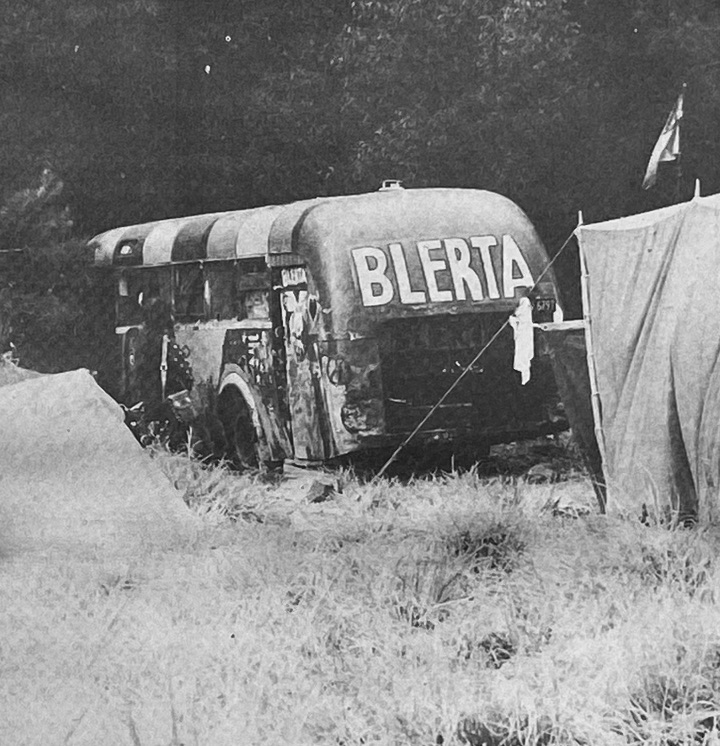
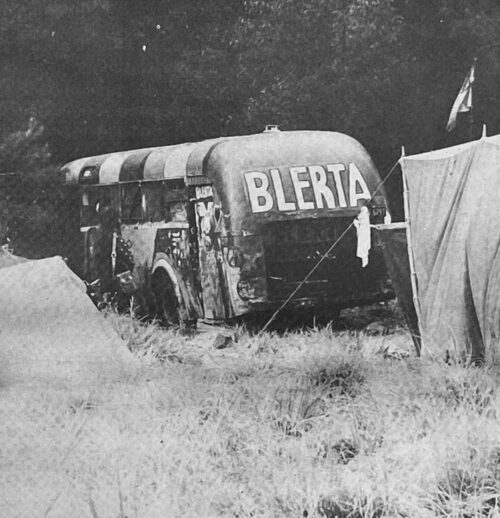
Aquarius Archives is now accepting donations of buses.
Donations Agreement
| Aquarius Archives Nimbin Community Centre 81 Cullen St Nimbin, NSW 2480 mail@aquariusarchives.org.au |
Donor Name:
Address:
Telephone:
Email:
Item(s) being donated:
Date acquired by Donor:
How acquired by Donor (eg. purchased, created, inherited); if purchased, specify price:
Please include with your Donation any other information and/or stories that enrich the life of and connection with the items, such as writing, photos and/or audiovisual recordings about the item.
Please consider making your Donation with no conditions. Conditions place additional burden on volunteers who donate their time. Please discuss any necessary conditions in advance, such as reserving rights or access to the Donation for specific purposes, restricting Aquarius Archives discretion in how it may use the Donation, or our Deaccessioning and Disposal Procedures as outlined in the Aquarius Archives Collection Policy.
- No Conditions
- Conditions:
- Public acknowledgement of your donation may be made
- Public acknowledgement of your donation may not be made
The Donor declares that:
- the Donor currently has full ownership, custody and control of the Donation and that nobody else claims any interest in the Donation;
- the Donor is entitled to give the Donation to Aquarius Archives;
- the Donor has received and understands the Aquarius Archives Collections Policy;
- the Donation is hereby given to Aquarius Archives completely and all copyright in the Donation held by the Donor is hereby assigned to Aquarius Archives (subject to any conditions above);
The Donor declares that all the information in this Donation Agreement is true.
Donor Signature and date:
Name of witness present:
Witness signature and date:
Name of Aquarius Archives Working Group (AAWG) member accepting the Donation:
AAWG member signature and date:
Thank you for donating your precious archives to Aquarius Archives. We will do our best to look after them with the Nimbin community.
The Donor may wish to contribute financially towards the maintenance and storage of the collection. Aquarius Archives is happy to provide information and advice to anyone wishing to make a bequest to Aquarius Archives through their will.
The information in this form is required for collection administration purposes. Information supplied will be held secure and will not be disclosed for any purposes other than those stated above.